
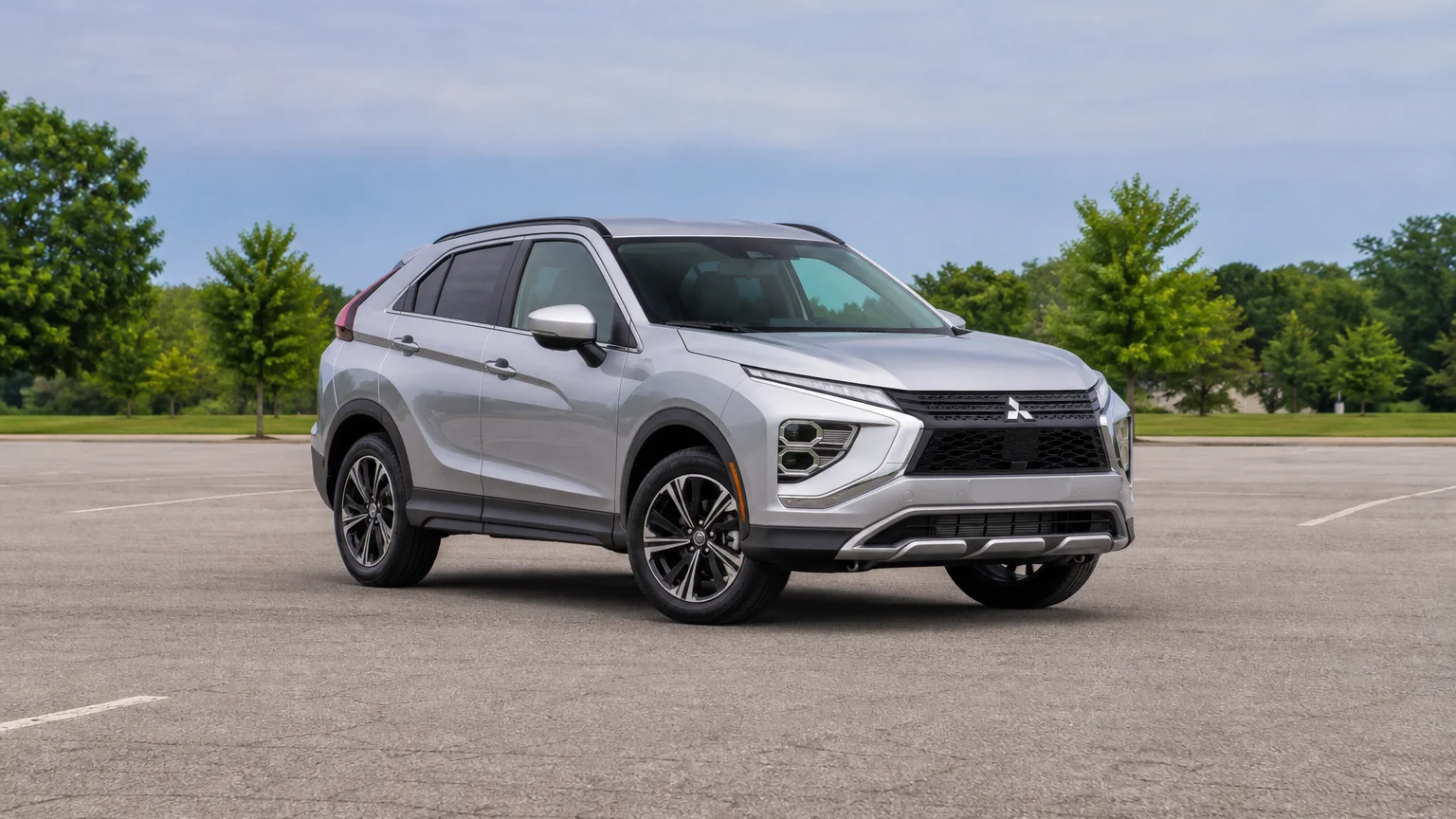
The Mitsubishi Eclipse Cross is a solid compact crossover that delivers turbocharged performance and a strong warranty in a competitive segment, but two model years carry a clearly elevated problem record that you'll want to sidestep. This guide uses data from CarComplaints, NHTSA, RepairPal, and owner forums to rank every model year so you can buy with confidence. Whether you're shopping for a first-generation deal or a facelifted second-generation example, the breakdown below tells you exactly which years to target - and which to pass.
For generations, engines, and ownership notes in one place, see the Mitsubishi Eclipse Cross hub.
Related guides appear in the Mitsubishi years to avoid directory.
At a glance
- Worst years
- 2018
- 2019
- Best years
- 2021
- 2022
- Top failure
- First-gen phantom braking / FCM-ECU software defect (NHTSA, 2018-2019)
- Always do before buying
- Run the VIN through NHTSA's recall checker to confirm recalls 18V-620 and 18V-621 are closed; on 2018-2019 cars, also check for CVT shudder on a test drive
How we rated the best and worst Mitsubishi Eclipse Cross years
The 2018 and 2019 Eclipse Cross are the years to avoid, driven by the highest complaint volumes, two active safety recalls, and - by CarComplaints’ PainRank - higher repair costs at lower mileage than every other model year.
This guide draws on NHTSA complaint and recall data, CarComplaints owner-reported defect counts, RepairPal reliability ratings, and owner discussion on the Eclipse Cross Forum. Attribution matters here: CarComplaints rates the 2019 model year as worse than 2018 because of higher repair cost or more problems at lower mileage, even though the 2018 has the most overall complaints. NHTSA measures raw complaint volume, and by that metric 2018 leads. They measure different things, and both data points appear below attributed to their correct source. Our years to avoid methodology applies the same complaint-volume, recall, and repair-cost framework to every model covered on this site.
| Mitsubishi Eclipse Cross Generation | Best Mitsubishi Eclipse Cross Years | Worst Mitsubishi Eclipse Cross Years |
|---|---|---|
| 1st Gen (2018-2020) | None | 2018, 2019 |
| 2nd Gen / Facelift (2021-present) | 2021, 2022 | None |
Every Mitsubishi Eclipse Cross model year ranked
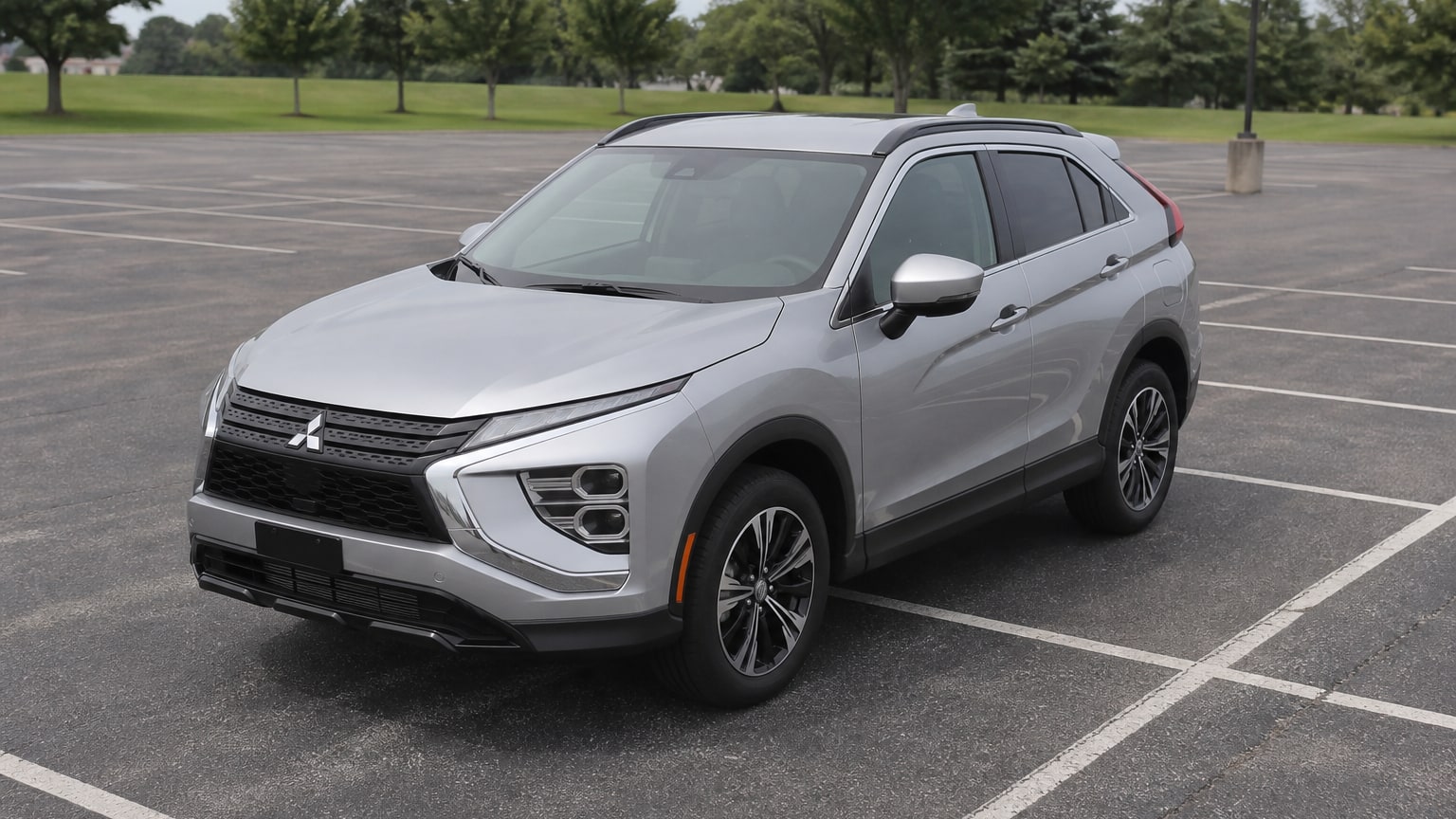
The Eclipse Cross has been in production since 2018, making every model year relatively modern and available on the used market. The matrix below covers all years with available data.
| Model Year | Generation | Verdict | Notes |
|---|---|---|---|
| 2018 | 1st Gen | Avoid | Highest raw complaint count (CarComplaints: 32); transmission, brakes, windshield issues; two safety recalls |
| 2019 | 1st Gen | Avoid | Rated worst by CarComplaints PainRank; oil/gas odor in cabin; airbag complaints |
| 2020 | 1st Gen | OK/Mixed | Only 6 CarComplaints reports; complaints drop sharply; some residual CVT shudder |
| 2021 | 2nd Gen | Best | Facelift year; very low complaint count; improved infotainment |
| 2022 | 2nd Gen | Best | Lowest CarComplaints complaints (1 report); ignition coil TSB addressed |
| 2023 | 2nd Gen | OK/Mixed | Sparse owner data; no notable complaint spikes |
| 2024 | 2nd Gen | OK/Mixed | Too new for full data set; no elevated recall pattern |
Most common Mitsubishi Eclipse Cross problems
The single biggest failure across the Eclipse Cross lineup is the first-generation Forward Collision Mitigation (FCM) phantom braking defect, which prompted two federal safety recalls and generated the model’s highest complaint volume. Below are the four recurring failure categories found across owner reports and NHTSA data.
1. Forward Collision Mitigation phantom braking (FCM-ECU software defect)
Early Eclipse Cross models with Forward Collision Mitigation brake hard for objects that are not there. NHTSA recall 18V-620 covers 2018-2019 Mitsubishi vehicles whose FCM-ECU software applies braking for longer than needed, even after a pedestrian is no longer detected, with the stated consequence that drivers brake harder in response and increase rear-end collision risk.
A companion recall, NHTSA campaign 18V-621, addresses a hydraulic unit ECU software defect that may prevent automatic emergency braking, ABS, electronic stability control, and Brake Auto Hold from working properly. Mitsubishi’s own reference number for the FCM-ECU campaign is SR-18-007. The hydraulic unit ECU campaign carries Mitsubishi reference number SR-18-008. Both repairs are a free software reflash at any Mitsubishi dealer.
Owner complaints go beyond the recall scope: filings describe adaptive cruise control triggering FCM braking when cresting hills with nothing ahead, and repeated multi-warning-light events with hard braking recurring several times a year despite dealer repairs. Repair costs run $0 for the covered recall work, but if phantom braking persists after the reflash, a windshield camera re-calibration can add up to $900. Buyer takeaway: before signing on any 2018-2019 Eclipse Cross, confirm both recall campaigns are closed on the VIN.
2. CVT shudder and surge
The Eclipse Cross CVT exhibits a noticeable shudder during light-to-moderate acceleration from a stop. CVT belt slippage and inconsistent clamping force create a vibration felt through the vehicle, particularly noticeable in the first few minutes of driving.
Certain vehicles with F1CJC/W1CJC (CVT-8) transmissions may exhibit a shudder or surge condition, possibly caused by poor reaction of the hydraulic pressure circuit - a condition Mitsubishi acknowledged through a Technical Service Bulletin. Repairs typically run $200 to $3,500, depending on whether a fluid change and recalibration resolves it or a full CVT replacement is needed. Dark, burnt-smelling CVT fluid accelerates internal wear, and fluid pooling under a parked car is an early warning sign worth investigating on any high-mileage first-gen example.
The 2018 Eclipse Cross has 32 problems reported on CarComplaints, with transmission among the worst complaint categories. The shudder tends to be most pronounced below 30,000 miles on heavily loaded or cold-weather starts. Buyer takeaway: take any 2018-2019 Eclipse Cross on a cold-engine test drive specifically to feel for the surge at low speed.
3. Oil and fuel odor in the cabin
The most-reported problem on CarComplaints for the 2019 Mitsubishi Eclipse Cross is oil/gas odor in the cabin and engine area. Owners describe the smell as strongest when the engine warms up, with no odor from a cold start, pointing to a PCV (positive crankcase ventilation) system issue.
The problem is a known fault and the subject of TSB-19-17-001. Dealers addressed it by fitting thicker hoses, and owners reported the smell cleared afterward. The fix itself is low-cost, but the 2019 Eclipse Cross has 23 problems and defects reported on CarComplaints, with engine and seat belt/airbag problems among the top categories, meaning the odor complaint adds to an already elevated problem count for that year. If you’re looking at a 2019, ask the dealer whether TSB-19-17-001 was performed and whether the PCV hose was replaced.
4. Windshield cracking and infotainment glitches
The 2018 Eclipse Cross has 32 problems reported on CarComplaints, and windows and windshield problems rank among the top complaint categories. Transmission is the biggest problem, with multiple complaints of rough shifts particularly from first to second gear and lunging/lagging, but a cracked windshield at 4,000 miles was also reported, suggesting the exterior glass may not be as durable as it should be.
The pre-facelift infotainment system, particularly the touchpad controller, is difficult to use and prone to erratic cursor behavior. Post-facelift models with the touchscreen still experience occasional freezing and Bluetooth disconnections. Infotainment repairs typically run $0 to $300, often resolved by a software update at the dealer. A whining noise when accelerating on first-gen models is sometimes confused with a CVT fault but can also trace to a loose infotainment fan bracket - worth having a technician separate the two complaints before authorizing a costly CVT repair.
Which Mitsubishi Eclipse Cross years should you avoid
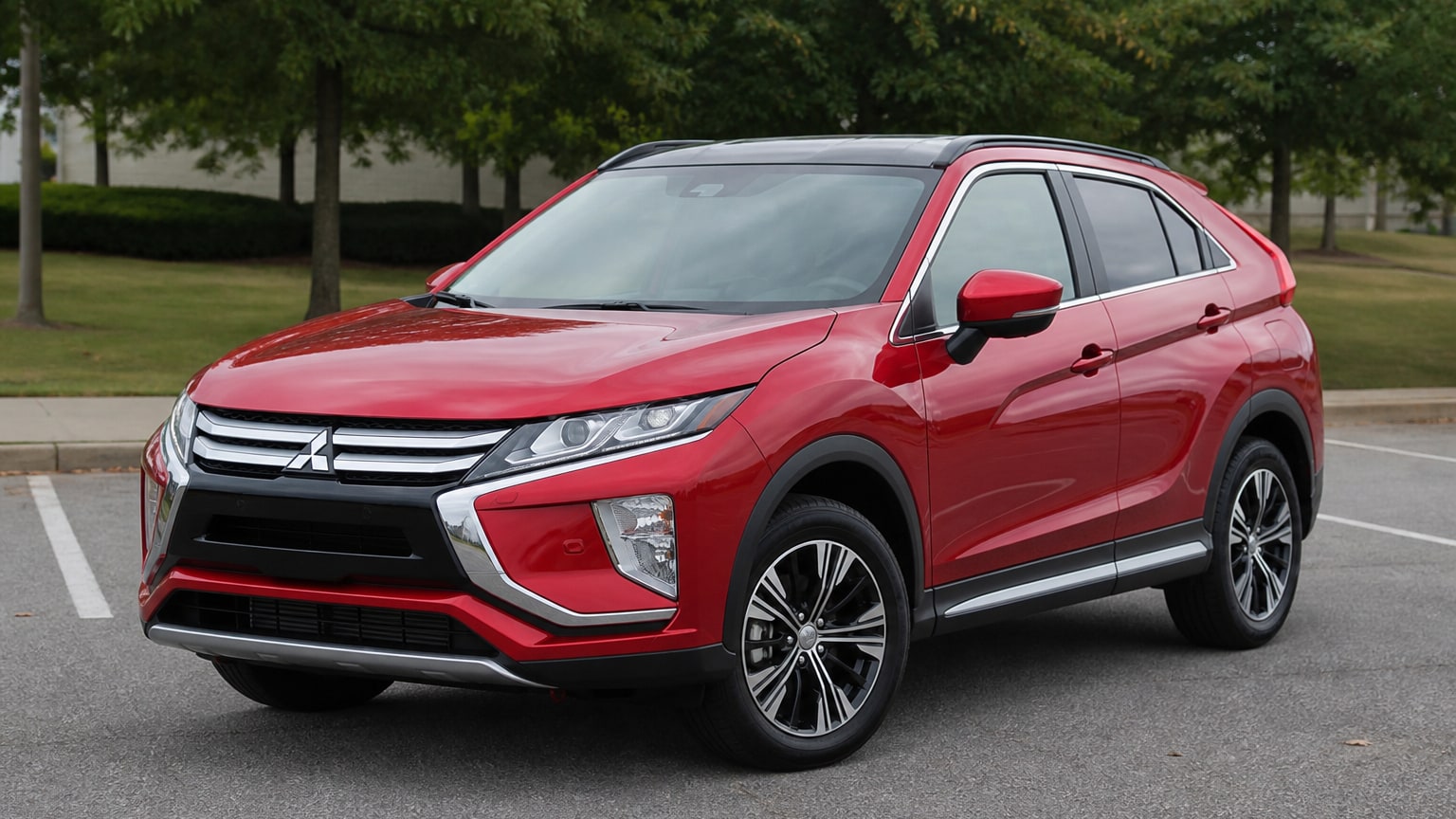
The Mitsubishi Eclipse Cross years to avoid are 2018 and 2019. CarComplaints rates the 2019 model year as the worst based on higher repair cost and more problems at lower mileage, even though the 2018 has the most total complaints on that platform. By raw NHTSA complaint volume, the 2018-2019 Eclipse Cross had a notable spike in NHTSA complaints that sets them apart from every later model year.
| Mitsubishi Eclipse Cross Generation | Model Years | Verdict | Main Issues |
|---|---|---|---|
| 1st Gen (2018-2020) | 2018, 2019 | Worst | FCM phantom braking, CVT shudder, windshield cracks, oil/gas odor |
| 1st Gen (2018-2020) | 2020 | Mixed | Low complaints, minor CVT carryover risk |
| 2nd Gen Facelift (2021-present) | 2021, 2022 | Best | Lowest complaints, ignition coil TSB resolved, improved infotainment |
| 2nd Gen Facelift (2021-present) | 2023, 2024 | Mixed | Sparse data, no elevated patterns |
First-generation Mitsubishi Eclipse Cross (2018-2019)
The 2018 Eclipse Cross has 32 owner-reported problems on CarComplaints, with transmission, brakes, and windows/windshield as the top categories. Two federal safety recalls - NHTSA campaigns 18V-620 and 18V-621 - covered the FCM-ECU software defect and the hydraulic braking unit on 2018-2019 model years.
The 2019 Eclipse Cross has 23 problems reported on CarComplaints, with engine and seat belt/airbag problems ranking as the worst categories. CarComplaints’ PainRank places 2019 above 2018 as the single worst year because problems appeared at lower mileage and carried higher average repair costs. The 2018 and 2019 model years were the first out of the gate for the Eclipse Cross and are fraught with problems; Mitsubishi cleaned up those issues by 2020.
What are the best Mitsubishi Eclipse Cross years to buy
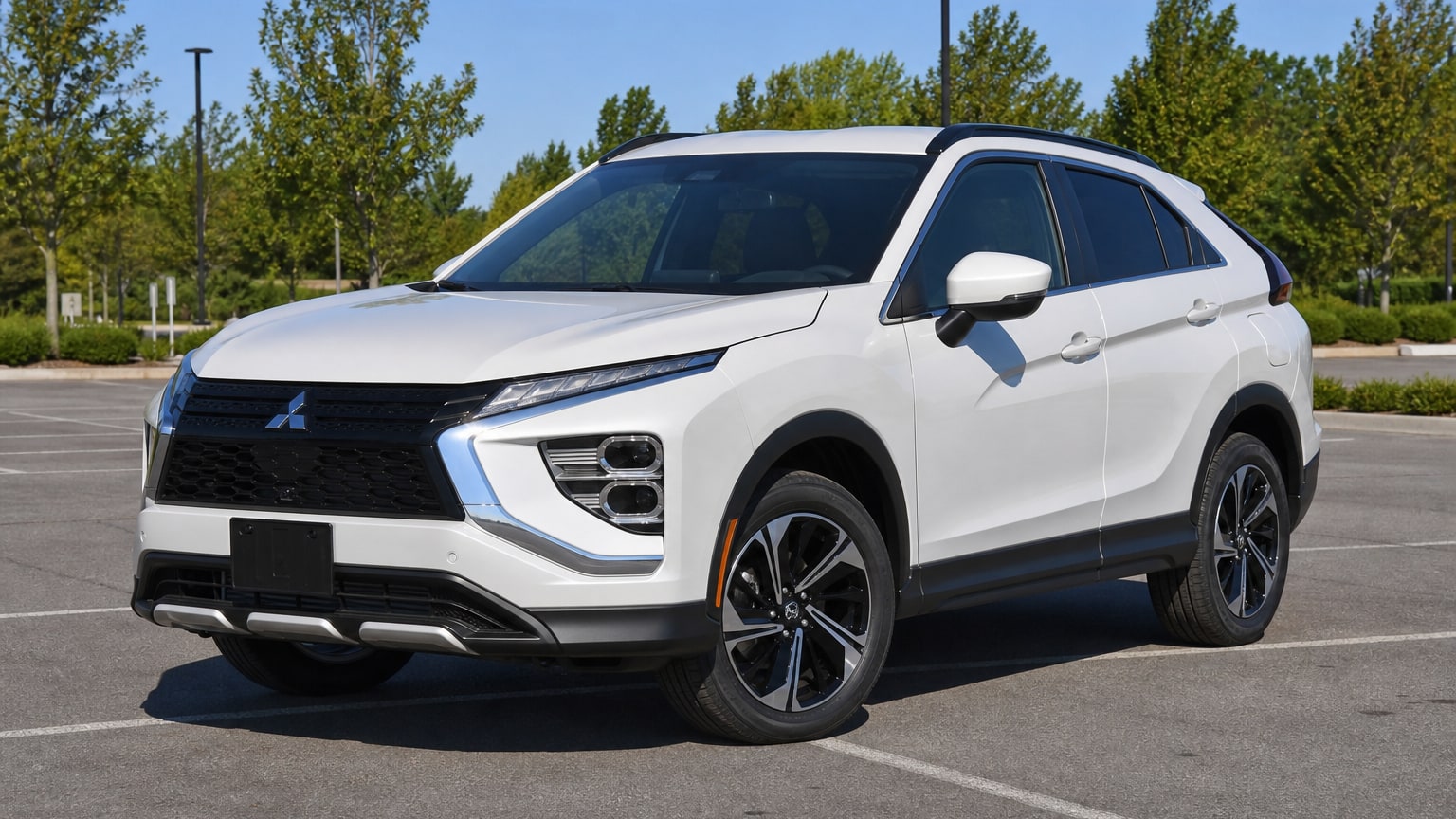
The best Mitsubishi Eclipse Cross years to buy are 2021 and 2022, which carry the lowest complaint counts, a revised touchscreen infotainment system, and no open safety recalls.
| Best Mitsubishi Eclipse Cross Year | Why It's a Strong Buy |
|---|---|
| 2021 | Facelift model with revised interior and touchscreen; sharp drop in complaints vs. first-gen |
| 2022 | Only 1 CarComplaints report; ignition coil TSB addressed; benefits from all 2021 updates |
2022 Mitsubishi Eclipse Cross
The 2022 Eclipse Cross has just 1 problem and defect reported by owners on CarComplaints, with accessories and interior as the lone complaint category - the lowest count of any model year in the lineup. A revised Technical Service Bulletin, TSB-22-16-001REV, addressed ignition coil replacement on customer-complaint basis for MIL illumination and loss of engine power on 2022 models, meaning the known fix is already in the dealer system. The 2022 is among the best used Eclipse Cross models available; reliability is average, with major repairs becoming more likely around 100,000 miles.
2021 Mitsubishi Eclipse Cross
The 2021 year introduced the second-generation facelift, replacing the criticized touchpad controller with a conventional touchscreen and updating the front fascia. From 2020 on, Mitsubishi addressed the Eclipse Cross’s early issues, and there are fewer reported problems overall. The 2021 is the first year to carry all those improvements from new, making it a cleaner used buy than a 2020 that straddles the generations. Kelley Blue Book gives the Eclipse Cross a reliability rating of 4.6 out of 5, and the 2021 benefits from that brand-level track record without the first-gen baggage.
Mitsubishi Eclipse Cross pre-purchase checklist
Before buying any used Eclipse Cross, run through these model-specific steps to avoid the most documented pitfalls.
- Run the VIN through NHTSA’s recall checker: Go to NHTSA recalls and confirm that both campaigns 18V-620 (FCM-ECU software) and 18V-621 (hydraulic braking unit ECU) are closed on any 2018 or 2019 model. These are free dealer repairs and must be completed before you take delivery.
- Test the FCM on the 2018-2019: During your test drive, drive at highway speed on a bridge or hill crest. If the car brakes hard with no obstacle ahead, the FCM recall reflash may not have been performed correctly - walk away or negotiate the dealer repair first.
- Feel for CVT shudder from a cold start: Take the car out before the engine fully warms up. A surge or vibration at low speed (0-30 mph) on a 2018-2019 example points to CVT belt or hydraulic pressure issues; repair can reach $3,500.
- Sniff for oil/gas odor on 2019 models: Let the engine warm up fully, then sit inside with the HVAC on recirculate off. A fuel or oil smell in the cabin is the top single complaint for that year and traces to a PCV hose issue covered by TSB-19-17-001 - confirm it was performed.
- Check the windshield on 2018 cars: Look for stress cracks at the corners or edges, which appeared in some owner reports at under 5,000 miles. A cracked windshield on a used car could indicate an unresolved structural or fitment issue.
- Inspect the infotainment and Bluetooth: On pre-facelift 2018-2020 cars, test the touchpad controller for erratic cursor behavior and confirm Bluetooth pairs reliably. A software update may be needed; confirm it is current before closing the deal.
- Ask for full service records: The CVT on all years benefits from scheduled fluid changes. A car without documented service history is a higher risk for transmission shudder at higher mileage.
- Check brake rotor temperatures after driving: Burning smells on 2018-2023 models can come from a stuck caliper-brake pad-rotor combination, typically on the rear right where the Electronic Parking Brake resides. After a test drive, carefully feel near each wheel for unusual heat on one corner.
Better alternatives to consider
If the Eclipse Cross years in your budget land on the 2018-2019 avoid list, these same-segment alternatives are worth pricing out:
-
Ford Escape - a longer production run with a wider used-market selection, though it has its own model years to skip in the 1.5T era
-
Honda CR-V - the class benchmark for long-term reliability, with many examples reaching 200,000 miles and a deeper service network
-
Mazda CX-5 - consistently rates near the top of the compact crossover segment for build quality and driving dynamics, with a cleaner first-generation problem record than the Eclipse Cross
-
Nissan Rogue - broader used inventory and lower average asking prices in the same displacement class, though the CVT warrants the same pre-purchase shudder check
Is the Mitsubishi Eclipse Cross worth buying
Yes - the Mitsubishi Eclipse Cross is a solid buy as long as you avoid the 2018 and 2019 model years. Mitsubishi as a brand earns a 4.0 out of 5.0 reliability rating from RepairPal, ranking 6th out of 32 car brands based on an average across 345 models, and the Eclipse Cross carries that brand-level durability into its later years. The Eclipse Cross is average in terms of reliability; it doesn’t have widespread major failures, but it is also not among the longest-lasting vehicles in the segment.
The 2021 and 2022 model years represent the best of the lineup, combining a revised interior, a conventional touchscreen, and the lowest CarComplaints counts of any Eclipse Cross on the market. Before finalizing any purchase, run the VIN through NHTSA’s recall checker and verify the maintenance history to confirm the CVT has been serviced on schedule.
Frequently asked questions
What are the best Mitsubishi Eclipse Cross years to buy?
The best Mitsubishi Eclipse Cross years to buy are 2021 and 2022. Both carry the fewest owner-reported complaints, benefit from the second-generation facelift’s revised touchscreen infotainment, and have no open safety recalls that haven’t been addressed in the dealer system.
What are the worst years for the Mitsubishi Eclipse Cross?
The worst years for the Mitsubishi Eclipse Cross are 2018 and 2019. CarComplaints rates 2019 as the single worst year based on higher repair cost and problems appearing at lower mileage, while 2018 carries the highest raw complaint count on that platform with 32 owner reports.
Which year Mitsubishi Eclipse Cross is most reliable?
The 2022 Mitsubishi Eclipse Cross is the most reliable pick in the lineup. The 2022 has just 1 problem reported on CarComplaints, the lowest count across all model years, and it incorporates every improvement introduced in the 2021 facelift along with the dealer-addressed ignition coil TSB.
What year Mitsubishi Eclipse Cross has the most forward-collision braking problems?
The 2018 and 2019 Eclipse Cross are the affected years. Mitsubishi recalled certain 2018-2019 Eclipse Cross models equipped with a Forward Collision Mitigation system because the FCM-ECU may apply braking for longer than needed, even after a pedestrian is no longer detected. The two NHTSA campaigns (18V-620 and 18V-621, Mitsubishi references SR-18-007 and SR-18-008) are free software reflashes at any Mitsubishi dealer; owners of unrepaired vehicles should have the work done before driving on highways.
How long does a Mitsubishi Eclipse Cross last?
Most estimates put the Eclipse Cross’s lifespan around 100,000 miles before larger repairs become more likely; Mitsubishi’s warranty coverage helps with newer models. With consistent maintenance - particularly scheduled CVT fluid changes - well-kept examples from the 2021-2022 generation can realistically exceed that threshold, and Kelley Blue Book users give the Eclipse Cross a reliability rating of 4.6 out of 5, which suggests most owners are satisfied with long-term durability when the early years are avoided.
Meta Title: Nissan Ariya Years to Avoid (2023-2026 Buyer Guide)
Meta Description: Avoid the 2023 Nissan Ariya - it carries 4 recalls and 39 NHTSA complaints. The 2024 and 2025 are stronger picks. NHTSA- and CarComplaints-backed guide.